Biography
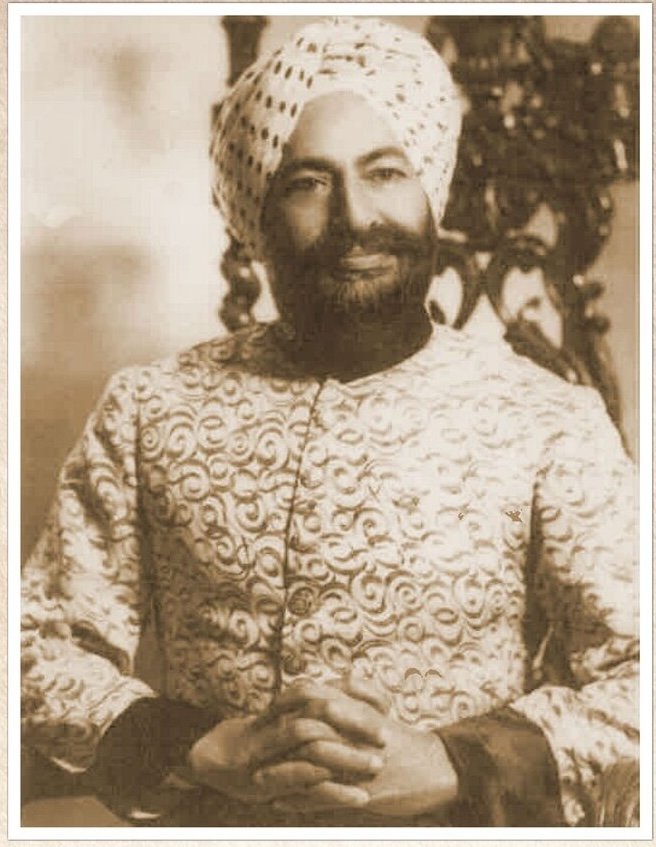
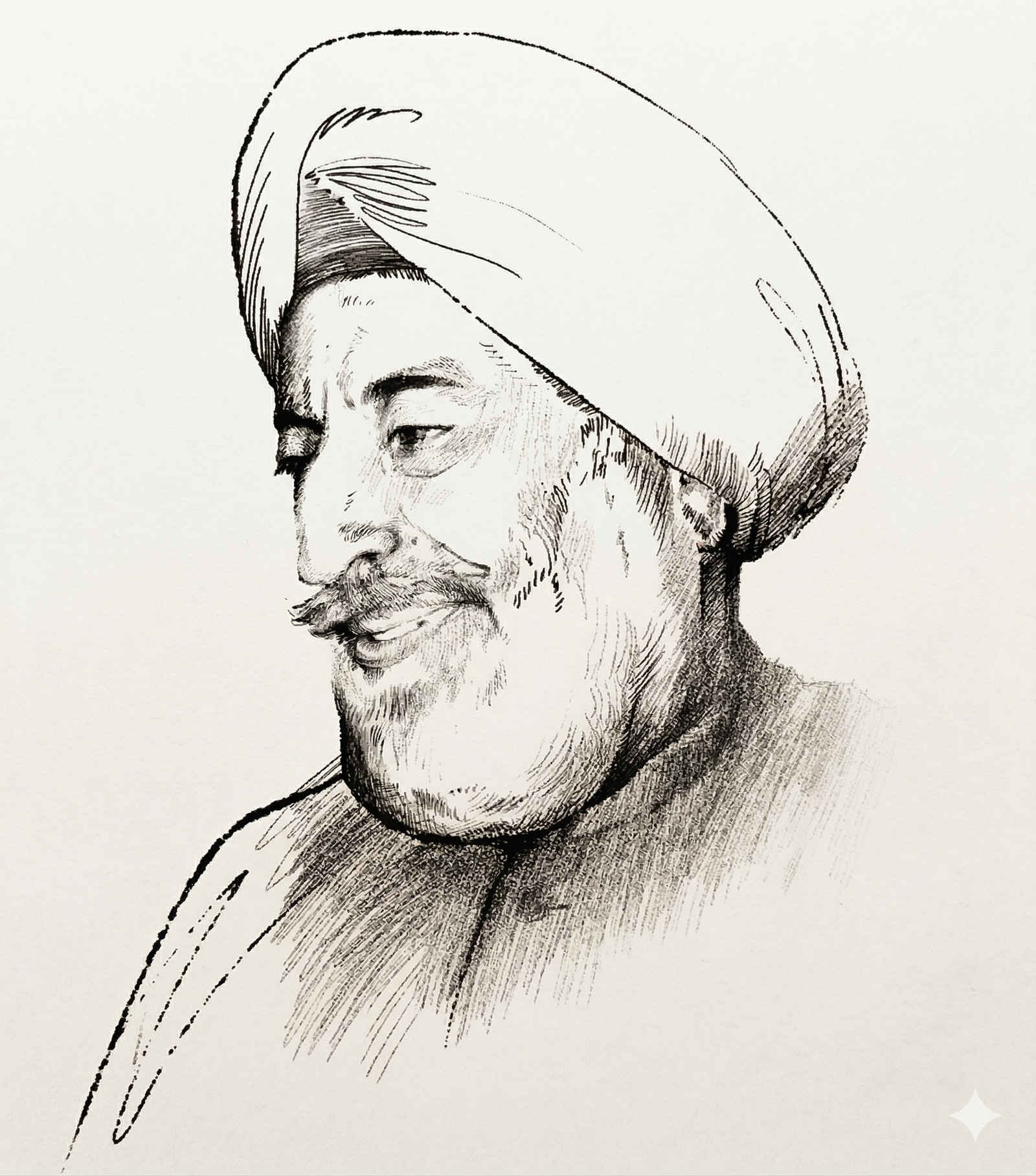
Kanwar Mohinder Singh Bedi ‘Sahar’ — 9 March 1909 – 18 July 1992
A life at a glance
کنور مہندر سنگھ بیدی ’سحر‘
9 March 1909 – 18 July 1992
An eminent officer and poet, an avid sportsman and an extraordinary human being — a Sikh who chose Urdu for his verse, a civil servant who chose compassion for his craft, and a cultural ambassador who spent a lifetime drawing people together.
Born
Montgomery (Sahiwal),
undivided Punjab · 1909
Lineage
Bedi Zamindars,
descended from Guru Nanak Dev Ji
Service
Punjab Civil Service → IAS;
City Magistrate, Delhi
Literary voice
Urdu ghazal & nazm;
takhallus — ‘Sahar’ (‘Dawn’)
Four lives, one man
Urdu was not his mother tongue, and he had no formal Ustaad. Yet through Tulu·e·Sahar (1962), Kulliyat·e·Sahar and the memoir Yaadon ka Jashn (1983), he left an indelible mark on the ghazal tradition.
From Additional Magistrate in Rohtak, Jalandhar, Multan, Kangra and Jhelum to IAS officer and City Magistrate of Delhi during Partition — working closely with Nehru and Patel to calm violence and rehabilitate refugees.
A wrestler and sportsman all his life. Manager of the Indian wrestling team at the 1960 Rome Olympics, and President of the Indian Style Wrestling Association, Punjab Boxing Association, and Chess Association of Delhi.
A celebrated Meer·e·Mushaira and cultural ambassador between India and Pakistan. Founder of Jashn·e·Jamhuriat on 26 January, close friend of Josh Malihabadi, mentor to younger shayars.
Born in 1909 into a wealthy Bedi Zamindar family that traced its lineage to Guru Nanak Dev Ji, Kanwar Mohinder Singh grew up in Montgomery (now Sahiwal, Pakistan). He fell in love with Urdu during his school days, and began writing ghazals while studying at Chief’s College and Government College, Lahore.
After his studies he looked after the family estate, pursuing wrestling, shikaar and poetry in parallel — until his selection into the Punjab State Civil Service. His early postings as Additional Magistrate carried him across the province and earned him a reputation for empathy and fairness. As an IAS officer he was sent to Delhi to head the National War Front, where he used sport, art and poetry to channel communal energy toward common causes.
Partition took the family’s Zamindari in Montgomery, and they rebuilt their lives in India. Appointed City Magistrate of Delhi, he worked alongside Jawaharlal Nehru and Sardar Patel to restrain violence and resettle refugees. He went on to lead Delhi’s Refugee Rehabilitation and, later, Punjab’s Information & Public Relations and Panchayat & Rural Development Departments. The annual Jashn·e·Jamhuriat on 26 January — the public celebration of India becoming a Republic — was his initiative.
His ghazals travelled far through the voices of the singers who loved them. Jagjit Singh devoted an entire album — Forget Me Not — to his poetry, including the celebrated “Aaye hain samjhaane log…” Mohammad Rafi recorded four of his non–film songs, among them “Chale aa rahe hain wo zulfein bikhere…” and Mehdi Hasan set his she’rs to the metre of Faiz Ahmed Faiz.
He also produced five films — two in Urdu — featuring Sunil Dutt, Dharmendra and Amitabh Bachchan, and counted Dilip Kumar and Om Prakash among his closest friends. He served as Vice–Chairman of both the Ghalib Academy and the Urdu Academy, Delhi.
Through every role, one thread held: an insistence on compassion, humanity and communal amity, carried lightly, with wit and humour. He passed away in 1992, leaving behind a body of work and a way of being that this Trust exists to preserve.
Continue exploring
Life in panels
A set of ten panels that tell the life of Kanwar Mohinder Singh Bedi ‘Sahar’ through his many callings — poet, officer, sportsman, film-maker, Urdu-lover, cultural ambassador and quiet Sufi. Click any panel to enlarge.
Eight decades spanning pre-Partition Punjab, thirty-three years of distinguished public service, and a luminous literary afterlife — the arc of a man who served his nation by day and courted the muse by night.
Born in the undivided Punjab town of Montgomery — today’s Sahiwal, Pakistan — into the illustrious Bedi lineage tracing back to Guru Nanak Dev Ji.
BeginningReceived his early education at the Government High School, Montgomery.
Completed the Senior Cambridge at the prestigious Chiefs’ College, Lahore — an institution reserved for the scions of Punjab’s princely and aristocratic families.
Graduated from Government College, Lahore with a Bachelor’s degree in History and Persian — sowing the seeds of a lifelong devotion to letters.
Sat for the fiercely contested Indian Civil Service examination in London.
Returned to the family estate to oversee zamindari affairs — a period of quiet stewardship of land, tenants, and tradition.
Married Smt. Sohinder Kaur — a union that would anchor him through partition, postings, and a lifetime of letters.
FamilyEntered public service with his first posting at Lyallpur (present-day Faisalabad) as Extra Assistant Commissioner.
AdministrativeServed as First Class Magistrate at Rohtak, followed by successive postings at Jalandhar, Multan, Kangra, and Jhelum — a tour that traversed the breadth of undivided Punjab.
Posted to Delhi as In-charge of the National War Front Office during the tumultuous Second World War years.
Appointed Additional District Magistrate at Kangra, Dharamsala, and soon transferred to Delhi as City Magistrate to navigate the searing aftermath of Partition.
Historic MomentHeld a succession of demanding charges in Delhi — Law and Order, Rehabilitation, Rationing, and National Integration — helping to rebuild a shaken capital.
Sub-Divisional Magistrate at Sonepat; Deputy Commissioner at Gurgaon, Sangrur, and Karnal; and Director of Panchayats, Chandigarh — shaping governance at the grassroots.
Released his debut collection of Urdu poetry — Tulu e Sahar (‘The Dawn Breaks’) — the formal beginning of his voice as a poet.
Literary MilestoneLaid down the pen of office after thirty-three years of distinguished public service — to pick up the pen of the poet.
RetirementSettled in Delhi and poured himself into social, literary, film-making, and philanthropic pursuits — mushairas, friendships, and causes filled what retirement might otherwise have emptied.
LiteraryPublished his autobiography Yaadon ka Jashn (‘A Celebration of Memories’) — a lyrical memoir of a life traversing empire, partition, and independence.
AutobiographyRelease of his collected poetry — Kulliyaat e Sahar — the summation of a lifetime of verse gathered under one cover.
Complete WorksDeparted in Delhi at the age of 83, leaving behind a legacy of service and verse — his dawn still breaking over those who read him.
RemembranceDescendants of Kanwar Mohinder Singh Bedi and Smt. Sohinder Kaur Bedi — a daughter, two sons, and the generations that followed.
The unbroken line of descent from Sri Guru Nanak Dev Ji through the Bedi clan to Kanwar Mohinder Singh Bedi — the direct ancestral path shown in heritage maroon, collateral branches in cream.